
For Kids · Children's Dentistry
Children’s Dentistry at Mountain Dental
Every child should leave a little more confident than they came in.
We believe kids are capable of more than they’re often given credit for. With patience, encouragement, and an environment where they feel comfortable, children build confidence with each visit. Over time, the dental office becomes a place they know, understand, and feel comfortable walking into.
Need Dental Services?
Opening Hours
Mon to Thursday: 8:30 AM - 4:30 PM. Friday: By appointment only.
Email Us
What we believe
How a child experiences the dentist can shape the way they feel about dental care for years to come. We treat children as whole people who are capable of handling a challenge when we take the time to explain what’s happening and guide them through the experience. With patience, encouragement, and consistency, their confidence grows with each visit. That philosophy guides every part of their care, from teaching good oral hygiene and providing practical nutrition guidance to how we approach treatment when it’s needed.
How we work with children
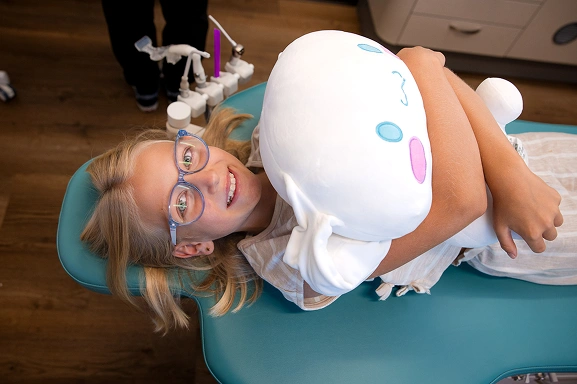
We explain what we’re doing in language a child can understand, show them what to expect, and guide them through each step. When children learn they can handle something that once felt difficult, they begin building confidence that carries into future visits.
Earning that trust takes time, and not every visit feels easy. Some children are comfortable from the beginning, while others need several visits and positive experiences to build that confidence. We don’t measure success by a single appointment. We look at the long term, staying patient and consistent as children become more familiar with the dental environment and more confident each time they return. Our goal is for them to grow up seeing dental care as a normal part of taking care of themselves, without carrying unnecessary fear or anxiety into adulthood.
When a child needs a little extra support during treatment, we offer nitrous oxide, commonly called laughing gas. It is a mild inhaled sedative that helps reduce anxiety while your child remains awake and responsive. The effects wear off quickly once the nitrous is stopped. We use it when appropriate to make treatment more comfortable while continuing to build the trust and confidence we want children to carry with them long term
Children's preventive care
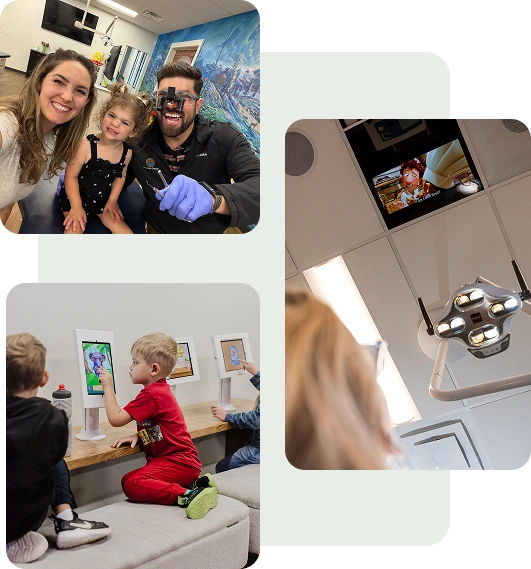
We see children for exams and cleanings beginning when their first teeth come in. These early visits give us a chance to follow how their teeth, jaws, and mouth are developing, identify concerns early, and begin building a comfortable, positive relationship with dental care that can last for years.
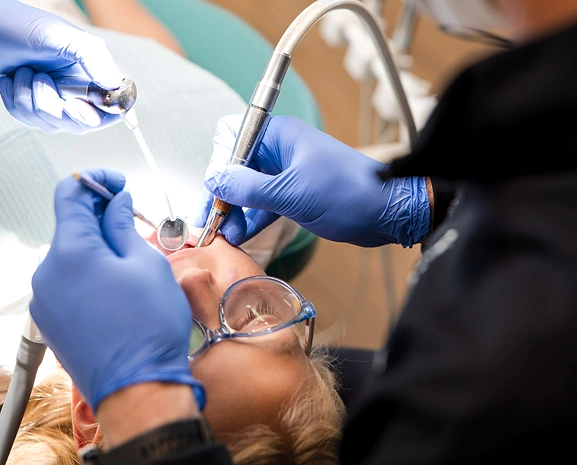
A child’s preventive visit includes a comprehensive exam, professional cleaning, digital X-rays when appropriate, and an evaluation of the teeth, gums, and surrounding tissues. Just as importantly, we spend time helping families understand what they can do at home. We provide practical guidance on brushing and oral hygiene, along with nutrition and habits that can affect dental health, including frequent snacking, processed carbohydrates, sugary drinks, and nighttime feeding.
Nutrition and prevention
Healthy teeth start with what happens at home.
Preventing cavities is about more than what happens during a dental visit. We spend time with families talking about the everyday habits that influence a child’s oral health and giving them practical ways to reduce the risk of decay at home.
We review brushing and oral hygiene techniques based on your child’s age and development, including where they may be missing and when they still need help from a parent. We also walk families through our nutrition protocol, looking at how often a child eats, the types of snacks and drinks they have throughout the day, processed carbohydrates, added sugars, and nighttime eating or drinking habits.
The goal isn’t to create a list of foods your child can never have. It’s to help parents understand which habits increase the risk of decay and where small, realistic changes can make a difference. Combined with regular exams and cleanings, this gives families the tools to actively protect their child’s teeth between visits and, whenever possible, prevent cavities before they start.
Materials
Thoughtful choices for growing smiles.
We believe the materials we use in a child’s mouth matter. That’s why we focus on biocompatible materials and choose restorative options with both the health of the tooth and the health of the whole child in mind.
When treatment is needed, we use biocompatible composite fillings along with ceramic and zirconia restorations when appropriate. We also incorporate options such as ozone and remineralization pastes to support and protect the natural tooth whenever possible. Our goal is to use the least invasive treatment that makes clinical sense while choosing materials we feel confident using in our own families.
We’re always happy to explain what we’re using, why we’re recommending it, and what alternatives may be available. Parents should feel informed and comfortable with the materials used in their child’s care.
We treat the whole child, not just the tooth.
Restorative care for children
When a child has a cavity or an injured tooth, we look at the whole picture, not just the tooth in front of us. With baby teeth especially, we consider the child’s age, the health of the tooth, the extent of the problem, and how long the tooth needs to remain before it naturally falls out. Sometimes the best approach is to restore and protect the tooth. Other times, removing it and carefully managing the space may make more sense. We take the time to explain those options so parents understand the reasoning behind our recommendation.
For restorative treatment, we use biocompatible, tooth-colored composite materials and incorporate ozone when clinically appropriate. Our goal is to preserve healthy tooth structure, support healing, and choose the most conservative treatment that makes sense for each child.
Zirconia & stainless steel
Composite fillings
When a cavity can be treated with a filling, we use biocompatible, tooth colored composite materials. Composite allows us to remove the damaged portion of the tooth while preserving as much healthy, natural tooth structure as possible. Because the material bonds directly to the tooth, we can often be more conservative in how we prepare and restore it.
We choose restorative materials with more than the tooth itself in mind. The composites we use are selected for their biocompatibility, durability, and ability to restore the tooth without the use of metal. Our goal is to use the least invasive treatment that will predictably restore the tooth while choosing materials that align with our whole body approach to dental care.
Gentle, with a plan
Children's extractions
Sometimes a baby tooth is too damaged or infected to predictably restore. When that happens, removing the tooth can be the healthiest and most conservative choice. We approach extractions gently and always consider what the loss of that tooth means for your child’s growth and development.
Depending on the tooth, your child’s age, and how long it would normally remain, we may recommend a space maintainer or incorporate the missing tooth into early orthodontic planning. Our goal isn’t to preserve a baby tooth at all costs. We would rather remove a tooth with a poor prognosis, eliminate a potential source of infection, and manage the space thoughtfully than put a child through extensive treatment for a tooth that may still fail before it is naturally ready to come out.
Metal & metal-free
Space maintainers
When a baby tooth is lost earlier than expected, the neighboring teeth can begin to drift into the open space, leaving less room for the permanent tooth developing underneath. A space maintainer is a small, custom appliance designed to preserve that space while your child continues to grow.
We offer both traditional metal and metal free options, giving families a choice based on their child’s needs and their preferences for care. It’s a simple, proactive way to guide dental development after the early loss of a baby tooth and can help reduce crowding and the need for more involved orthodontic treatment later.
Baby root canals
Pulpotomies
A pulpotomy, sometimes called a baby root canal, removes the affected portion of the pulp inside a baby tooth while leaving the remaining root structure in place. While pulpotomies can help preserve a baby tooth, we use them sparingly. Once the pulp has been significantly compromised, the tooth may be more vulnerable to future failure or infection, so we don’t believe preserving it is always the best long-term choice.
Instead, we look at the child’s age, the condition of the tooth, how long it needs to remain, and the importance of maintaining space for the developing permanent tooth. In many cases, another treatment approach may offer a more predictable outcome. In select situations, when keeping the tooth provides a meaningful benefit and the tooth has a good prognosis, we do offer pulpotomy treatment. Our goal is not simply to keep every baby tooth as long as possible, but to choose the option that best supports your child’s overall oral health and development.
Early intervention and your child's airway
Between the ages of six and ten, a child’s jaws and palate are still developing, creating an important opportunity to guide growth when needed. At routine visits, we look beyond how the teeth are coming in and evaluate the development of the jaws, palate, bite, tongue position, and airway. Some children benefit from early treatment, while others are better served by simply monitoring their growth. We’ll explain what we see and whether intervention makes sense for your child.
Our orthodontic approach is centered on growth, function, and the airway, not just straight teeth. We look at how a child breathes, where the tongue rests, how the jaws and palate are developing, and how those structures work together. Palate expansion is one of the tools we may use to create space and guide development. For children in active treatment, we can also coordinate care with Dr. Malori Tinsley at Well Balanced Body Chiropractic in the same building, integrating cranial work with the changes occurring in the jaw and palate.
This approach continues beyond childhood, so you can learn more on our Functional Orthodontics page, including palate expansion, braces, clear aligners, and appliances designed to support tongue position and jaw development. If you’re wondering whether your child could benefit from early treatment, we can evaluate their growth and development as part of their comprehensive exam.
The dental health savings plan for kids
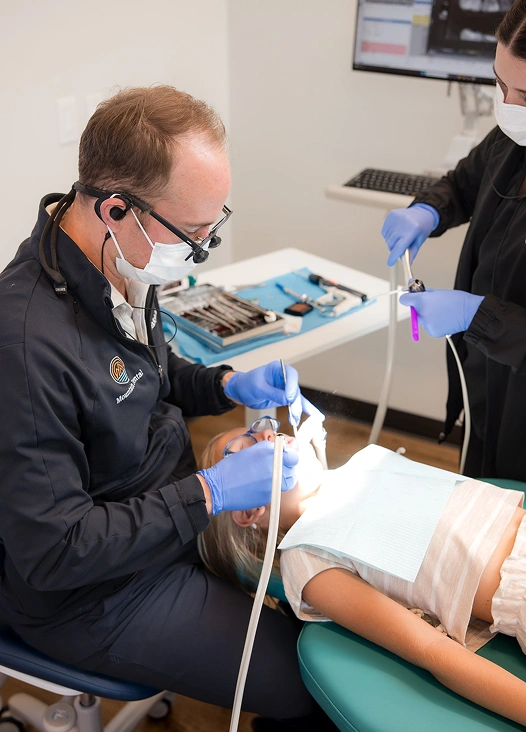
Many families prefer a simple, predictable way to stay consistent with their child’s dental care. Our Dental Health Savings Plan includes essential preventive care for one flat annual rate, along with savings on additional treatment when needed.
The plan is designed to keep children on a consistent preventive schedule throughout their growing years, giving us the opportunity to monitor changes in their teeth, bite, and development while identifying concerns early. It’s a straightforward way to make regular care easier to plan and stay ahead of problems as your child grows.
Ready to get your child started?
Schedule a new patient exam and we’ll take it at your child’s pace, from the very first visit.
or call (530) 642-8614